You know, I absolutely do my best to try and not to fall for women too quickly. The thing is, when I am attracted to someone, it is generally because I can read people relatively accurately and get a good sense of what they are like.
Well, there is this one lady at the gym, around 26 or so if I recall right. I will call her Medicine Ball. Now, she is a sweet lass, Indian, a lot of features I like, you know, eyes that are gorgeous to look at, sarcastic bitchy sense of humour, gives as good as she takes banter wise, you know, my ideal woman lol.
A few weeks ago, Medicine Ball and I were chatting, and I had asked her what she was trying to work on. Well, it is Indian Wedding season apparently, most of us call it summer. Anyways, like most pretty young women, abs, bum and arms were on the need to work out. Well, we were doing some situp/twists/medicine ball routines. We had pretty much hit it off personality wise really fast. I was giving her a good workout, and had said something pretty smartypants wise, and well, next thing I know, I get smacked on the chin with a medicine ball. Cricket Rule #1 was broken that day: Never take your eye off the ball... NEVER. Well, Indian girls have gorgeous eyes, and I was having a bit of a swim in them.
Next thing, I feel like I had been hit on the chin in an attempted knockout. I now know that I have a resistance rating of 3kgs from a medicine ball. I also know that the muscles around my chin will twitch for about two weeks afterwards.
Fast forward to today. I was happy that I got to see her in the gym. She asked if I were feeling better after my cold yesterday, and we started discussing books etc. Then it got onto the subject of Indian wedding time. I asked her if she wanted me to give her another good ab workout. First thing out of her mouth was: Would you like me to even up your chin with a medicine ball on the other side? Girls make it so hard for guys not to fall in love with them when we get told things like this :-)
24 July 2012

19 July 2012
Contolling the past through the present.
Living in the past is like living in a house with things that are broken, and unable to be repaired. Sure, you are living in a house, but what are you getting from it? Your fridge is broken, your food goes off. Your stove doesn't work, so you eat cold off food. Eating all this off food makes you sick, and that is what living in the past does.
I am, wait, let's correct that, WAS super guilty of just this. Constantly using my physical conditions to justify what a shit growing up I had. Using my past to excuse why I wasn't good at this or that, or didn't do what I should have done. These all boil down to one word. Excuses. Humans are fantastic at devising these. Bring in religion on top of that, and well your excuses become even more fantastic. Regular excuse: I didn't learn how to count, because my parents were stupid. Okay, a partial excuse, but you could have paid attention in class. Excuse with Religion: I didn't learn how to count, because my parents said that since I was a girl, then I didn't need to count. Wow. This turns from being a passable excuse because of circumstance, to a huge abuse of a person's basic right to education.
What does this have to do with living in the past? Simple. Excuses are bred out of the past. We take something from the present, or the non-substantial future, and add something from the past to give us a reason for why we can't do it. Example: I can't wear sandals, because my dad wore them with knee high socks. Actually, this one is true, but what you are seeing, is that I am bringing up a current problem and using the past to justify it. What if, the reason I don't like wearing sandals is because I continuously stubbed my little toe, but didn't want to admit it because it made me feel embarrassed about not having complete muscular control in my right leg? Which is also a truth. But, I would rather use the past as it is more convenient and easier to justify, and in this case, I know a lot of my primary school friends would get a laugh out of it, because certain parents and teachers did the exact same thing. But what you are seeing, is that we use the past, not only on a personal scale, but a global scale. My dads father hate Irish people, he made them out to me as a child, to be these demonic people, and I can't remember why anymore, but he had a passionate hatred towards them. What had all the Irish in the world done to make him hate them so much? How is it, that the first person I met who was Irish, I became great friends with, and wish I had kept in touch to this day? It was because, when we judge some group, it is usually because of a notion from the past, one that has been brought around by generation after generation. What we are not looking at is what those people, in that particular country/nation/ethnic group are like right now. Now, I know a lot of you are going to comment on multiculturalism, and how it is becoming apparent that it isn't working in a lot of places, but this is due to a very simple thing. People are not willing to co-operate or change, because they feel that they are going to lose their past, their identity. What if you realized that your identity is that of a human being that shares the planet with 7.4billion other human beings? Sure, if you or someone else moves to a foreign country, then yes, the obligatory learning how to speak the local language is the must, or at least attempting. But, remember, it is these outside societal influences, these social programmes that we have had to endure for thousands of years, that are dividing us, and causing all the problems in the world. It is not that person A is any different other than colour and a few variations in the genetic structure, but they are still someone who wants their children to grow up in peace and happiness.
The past and social programming give us the tools to take away the responsibility from our own actions. They allow us to ignore the present, what is directly affecting us at this exact second in time. Right now, I am sharing my thoughts, listening to some music, taking a breath in and smelling the mint tea on the floor next to me, and enjoying the full belly I have. Other than that, I am not concerned about the war in Syria, as heartless as it sounds, it doesn't affect the exact second of time I am describing to you. It doesn't affect the fact that I am doing these things. What it does affect though, is that fact that I empathize with the innocent people who are being slaughtered, in the name of nationalism and politics. It hurts my mind to realize that babies are not going to have the chance to make this world a better place, because their parents belonged to the wrong religion/belief/political party. These children were not yet programmed by society. All they wanted to do was love and play, they wanted to enjoy each second that they could, because at that age, time doesn't matter to them, it has no hold over them. All it means, is that when mummy or daddy say bed time, that means they have to sleep, so they can play again tomorrow. As you can see, the past and social programming is detrimental to our health. I am more concerned about how things are being sold to us, or about how my Irish friend had lost her boyfriend to a bomb blast because he was caught in the wrong spot at the wrong time. These variables, these things that we cannot change because they come from the past.
It kind of sounds hopeless when you look at it from the point of view of worshipping the past. The past with all this power, this hold over our thoughts and dreams, our desires (or the denial thereof in some circles). These past snapshots are just that. Moments in time, that should not have a hold over how we are perceived and act today. If I were to kill a woman who had sex before marriage, because according to the bible, that is what should be done, does that make me any better than her and what she had done. Well according to the past, yes it does! But, really, in the current, it makes me a murderer, and I have the life of a person I don't know or who has done nothing to me on my hands. What a hold the past has on us! How can we show that it is the past that makes our problems worse, that makes our lives harder. Right now, I am listening to a piece of music from my youth. When I was younger, it had a personal meaning to me, and I smile to think of it. I am having a memory of the past. Yet in that next instant, I am listening to the song without that memory, and I enjoy it just as much, because I like the feel of the song, the groove, the beat. I just overrode ac memory, and enjoyed the song for the first time without a memory affecting my perception of it. But if I had sat and listened to that song with the original memory it was linked to, I would be depressed and brought back into a space in time I didn't care for. I think the slogan of Ingsoc in George Orwell's 1984 had an interesting bit of truth in it:
He who controls the present, controls the past.
He who controls the past, controls the future.
This could be insightful into how we think. If I can live in the present, I can control the aspects of how the past influences what is happening right now. I can't ignore that I am perceived by others, primarily based on my past, but I can control those bits of the past that I want others to see, so I can use it to influence how they see me in the future. This allows me to live in a manner, where I am not letting the things that are done, undo the things that are happening right this second, or might happen, in a seconds time. Sure, there are certain truths that cannot be changed. I have 2 parents, I was born with birth problems. These are things that are fundamental truths. But I can control the fact that not even a month ago, I would wake up in the middle of the night, because something from my childhood kept popping up. Not even 1 week ago, I decided that the unchangeable events, those things that had no bearing on how I conduct myself now, were not necessary for my daily survival, I slept better, and have not had it come back even once! It is because I am in control of how I react now to things going on around me, those things that I can change, I change. Those things that I can't change, I acknowledge that I can't change it, but try to find a way to work with it as part of my world view. This led me to be able to realize that the past cannot be changed, things cannot be undone, but I can control how I, Jim, react to their influence. I decided that 95% of the things in my past have no concern on my current. Being called hipless doesn't influence the fact that I have a brand new hip, it influenced my self esteem. Being told I couldn't join the army doesn't mean I can't take the lessons I learned from the 5 years of experience, and the probably 10 or more years of interest in military history, and learn the lessons and apply them to the now. I hold myself proud and tall, I walk with a purpose, I analyze 200 steps ahead, and 100 steps behind, and make assessments on my safety. It doesn't mean I am going to throw a grenade to remove the threat, but it does mean that I will re-navigate a safer route. It almost destroyed me not getting into the military, but now, I think it was a good thing. Being too efficient at somethings is not a good thing these days.
But how does having control of your present, and by proxy, your past, have an effect on your future, especially if you believe that the future is uncertain, and may not come because of the myriad of ways that human life can be cut short? Well, that is an interesting question, but it can be answered. As I said, as much as I know that the future has a good way of not being what you think it should be, the dinosaurs, if they were more sentient than we know of, realized this the drastic way, that whilst you can create a path or grand plan for yourself, you can only move onto the next stage if all the things in the current stage have been met. For example, for me to get my goal of working with disabled athletes, I need several steps. Level 2 Fitness, Level 3 Personal Training, UK Strength and Condition accreditation and possibly Level 4 advanced training, and more knowledge on top of that through experience. When I first was interviewed for the Level 2 course, I was asked what I wanted to do. When I told them my long term goals, and the intended course of action, the articles I have read and my personal history with disability, the only thing I didn't have an idea on was time. I knew this was the right step, because by putting a time frame on it, I am potentially setting myself up to fail, and failure does not produce a satisfactory response. By negating a precise time frame, it keeps me in the current and makes me look for alternatives to help get there. For example, I am looking for funding to get the level 3 portion done. Now, while I am doing that, I am also looking for a back up job, as well as looking at research on different disabilities that I would encounter. This then led me to ask for a position that I knew would not lead to a job right away. Now, this has caused some strain, but what it has done, is guaranteed that I am doing the right things to work towards my plan. Now that I have a reputation as someone who is working towards a specific goal, and not just an economic goal, I am able to start applying for the jobs as a security. This will then allow me to bring knowledge I have gained, and say, we should incorporate this and that. This is me controlling my present, to bring about the changes required to help bring that future a bit closer to fruition. I am not controlling what the future is doing, because the future as I believe, may be snuffed out by human stupidity, or a meteorite, or a speeding vehicle, but, I am laying the groundwork to make the next step I can control.
To be continued.
I am, wait, let's correct that, WAS super guilty of just this. Constantly using my physical conditions to justify what a shit growing up I had. Using my past to excuse why I wasn't good at this or that, or didn't do what I should have done. These all boil down to one word. Excuses. Humans are fantastic at devising these. Bring in religion on top of that, and well your excuses become even more fantastic. Regular excuse: I didn't learn how to count, because my parents were stupid. Okay, a partial excuse, but you could have paid attention in class. Excuse with Religion: I didn't learn how to count, because my parents said that since I was a girl, then I didn't need to count. Wow. This turns from being a passable excuse because of circumstance, to a huge abuse of a person's basic right to education.
What does this have to do with living in the past? Simple. Excuses are bred out of the past. We take something from the present, or the non-substantial future, and add something from the past to give us a reason for why we can't do it. Example: I can't wear sandals, because my dad wore them with knee high socks. Actually, this one is true, but what you are seeing, is that I am bringing up a current problem and using the past to justify it. What if, the reason I don't like wearing sandals is because I continuously stubbed my little toe, but didn't want to admit it because it made me feel embarrassed about not having complete muscular control in my right leg? Which is also a truth. But, I would rather use the past as it is more convenient and easier to justify, and in this case, I know a lot of my primary school friends would get a laugh out of it, because certain parents and teachers did the exact same thing. But what you are seeing, is that we use the past, not only on a personal scale, but a global scale. My dads father hate Irish people, he made them out to me as a child, to be these demonic people, and I can't remember why anymore, but he had a passionate hatred towards them. What had all the Irish in the world done to make him hate them so much? How is it, that the first person I met who was Irish, I became great friends with, and wish I had kept in touch to this day? It was because, when we judge some group, it is usually because of a notion from the past, one that has been brought around by generation after generation. What we are not looking at is what those people, in that particular country/nation/ethnic group are like right now. Now, I know a lot of you are going to comment on multiculturalism, and how it is becoming apparent that it isn't working in a lot of places, but this is due to a very simple thing. People are not willing to co-operate or change, because they feel that they are going to lose their past, their identity. What if you realized that your identity is that of a human being that shares the planet with 7.4billion other human beings? Sure, if you or someone else moves to a foreign country, then yes, the obligatory learning how to speak the local language is the must, or at least attempting. But, remember, it is these outside societal influences, these social programmes that we have had to endure for thousands of years, that are dividing us, and causing all the problems in the world. It is not that person A is any different other than colour and a few variations in the genetic structure, but they are still someone who wants their children to grow up in peace and happiness.
The past and social programming give us the tools to take away the responsibility from our own actions. They allow us to ignore the present, what is directly affecting us at this exact second in time. Right now, I am sharing my thoughts, listening to some music, taking a breath in and smelling the mint tea on the floor next to me, and enjoying the full belly I have. Other than that, I am not concerned about the war in Syria, as heartless as it sounds, it doesn't affect the exact second of time I am describing to you. It doesn't affect the fact that I am doing these things. What it does affect though, is that fact that I empathize with the innocent people who are being slaughtered, in the name of nationalism and politics. It hurts my mind to realize that babies are not going to have the chance to make this world a better place, because their parents belonged to the wrong religion/belief/political party. These children were not yet programmed by society. All they wanted to do was love and play, they wanted to enjoy each second that they could, because at that age, time doesn't matter to them, it has no hold over them. All it means, is that when mummy or daddy say bed time, that means they have to sleep, so they can play again tomorrow. As you can see, the past and social programming is detrimental to our health. I am more concerned about how things are being sold to us, or about how my Irish friend had lost her boyfriend to a bomb blast because he was caught in the wrong spot at the wrong time. These variables, these things that we cannot change because they come from the past.
It kind of sounds hopeless when you look at it from the point of view of worshipping the past. The past with all this power, this hold over our thoughts and dreams, our desires (or the denial thereof in some circles). These past snapshots are just that. Moments in time, that should not have a hold over how we are perceived and act today. If I were to kill a woman who had sex before marriage, because according to the bible, that is what should be done, does that make me any better than her and what she had done. Well according to the past, yes it does! But, really, in the current, it makes me a murderer, and I have the life of a person I don't know or who has done nothing to me on my hands. What a hold the past has on us! How can we show that it is the past that makes our problems worse, that makes our lives harder. Right now, I am listening to a piece of music from my youth. When I was younger, it had a personal meaning to me, and I smile to think of it. I am having a memory of the past. Yet in that next instant, I am listening to the song without that memory, and I enjoy it just as much, because I like the feel of the song, the groove, the beat. I just overrode ac memory, and enjoyed the song for the first time without a memory affecting my perception of it. But if I had sat and listened to that song with the original memory it was linked to, I would be depressed and brought back into a space in time I didn't care for. I think the slogan of Ingsoc in George Orwell's 1984 had an interesting bit of truth in it:
He who controls the present, controls the past.
He who controls the past, controls the future.
This could be insightful into how we think. If I can live in the present, I can control the aspects of how the past influences what is happening right now. I can't ignore that I am perceived by others, primarily based on my past, but I can control those bits of the past that I want others to see, so I can use it to influence how they see me in the future. This allows me to live in a manner, where I am not letting the things that are done, undo the things that are happening right this second, or might happen, in a seconds time. Sure, there are certain truths that cannot be changed. I have 2 parents, I was born with birth problems. These are things that are fundamental truths. But I can control the fact that not even a month ago, I would wake up in the middle of the night, because something from my childhood kept popping up. Not even 1 week ago, I decided that the unchangeable events, those things that had no bearing on how I conduct myself now, were not necessary for my daily survival, I slept better, and have not had it come back even once! It is because I am in control of how I react now to things going on around me, those things that I can change, I change. Those things that I can't change, I acknowledge that I can't change it, but try to find a way to work with it as part of my world view. This led me to be able to realize that the past cannot be changed, things cannot be undone, but I can control how I, Jim, react to their influence. I decided that 95% of the things in my past have no concern on my current. Being called hipless doesn't influence the fact that I have a brand new hip, it influenced my self esteem. Being told I couldn't join the army doesn't mean I can't take the lessons I learned from the 5 years of experience, and the probably 10 or more years of interest in military history, and learn the lessons and apply them to the now. I hold myself proud and tall, I walk with a purpose, I analyze 200 steps ahead, and 100 steps behind, and make assessments on my safety. It doesn't mean I am going to throw a grenade to remove the threat, but it does mean that I will re-navigate a safer route. It almost destroyed me not getting into the military, but now, I think it was a good thing. Being too efficient at somethings is not a good thing these days.
But how does having control of your present, and by proxy, your past, have an effect on your future, especially if you believe that the future is uncertain, and may not come because of the myriad of ways that human life can be cut short? Well, that is an interesting question, but it can be answered. As I said, as much as I know that the future has a good way of not being what you think it should be, the dinosaurs, if they were more sentient than we know of, realized this the drastic way, that whilst you can create a path or grand plan for yourself, you can only move onto the next stage if all the things in the current stage have been met. For example, for me to get my goal of working with disabled athletes, I need several steps. Level 2 Fitness, Level 3 Personal Training, UK Strength and Condition accreditation and possibly Level 4 advanced training, and more knowledge on top of that through experience. When I first was interviewed for the Level 2 course, I was asked what I wanted to do. When I told them my long term goals, and the intended course of action, the articles I have read and my personal history with disability, the only thing I didn't have an idea on was time. I knew this was the right step, because by putting a time frame on it, I am potentially setting myself up to fail, and failure does not produce a satisfactory response. By negating a precise time frame, it keeps me in the current and makes me look for alternatives to help get there. For example, I am looking for funding to get the level 3 portion done. Now, while I am doing that, I am also looking for a back up job, as well as looking at research on different disabilities that I would encounter. This then led me to ask for a position that I knew would not lead to a job right away. Now, this has caused some strain, but what it has done, is guaranteed that I am doing the right things to work towards my plan. Now that I have a reputation as someone who is working towards a specific goal, and not just an economic goal, I am able to start applying for the jobs as a security. This will then allow me to bring knowledge I have gained, and say, we should incorporate this and that. This is me controlling my present, to bring about the changes required to help bring that future a bit closer to fruition. I am not controlling what the future is doing, because the future as I believe, may be snuffed out by human stupidity, or a meteorite, or a speeding vehicle, but, I am laying the groundwork to make the next step I can control.
To be continued.
18 July 2012
Fighting the past to dethrone the future.
Why?
Sit down for a moment, and ask yourself why. Don't put anything after that word, just ask why. What does saying this word in a pure, inquisitive way, conjure into your mind? When I recently asked why, I had to admit, I cried. 38 years of pain, anguish, doubt, self-loathing boiled up to the surface, and hit me. It was then, for the first time, I felt I was able to say goodbye to the past.
The past, now that in itself is an intriguing concept. A collection of thoughts, emotions, experiences, cultural/national/personal prejudices, beliefs, loves and hatreds that make us who we are. It shapes how we steer the boat that is our life. Some of us steer it like Captain John Edward Smith, right into a field of icebergs. Others do so like the savior of the ancient Greeks, Themistocles, presiding powerfully over their fleets, striking blows at the heart of their enemies. The problem is, the past is a powerful enemy, intent on hijacking the present, and plotting to terrorize our future. It is a force to be reckoned with, and has no moral laws of conflict. It is like an army who breaks all the rules of the Geneva convention, breaks all the rules Hammurabi set down on the conduct of a civilized society. It refuses to place nicely in the sandpit of life, eagerly looking to bully us into irrational behavior. I know this, because it has done very well for the last 38 years.
For all of our intellectual wisdom, we have come up with one of the most astounding, and alternatively, devious concepts known to man, Time. There was a point in our existence, that we knew the sun came up and stayed in the sky, then set. It then disappeared into the underworld, only to be released the next morning. It was here that we started to change. Our brains wanted to keep track of it, to avoid whatever catastrophe lurked in the period when we couldn't see by the bright light. Somehow, our brains allowed us to start calculating time, and then we patterned our behavior on this. Daytime became a time of productivity, work and inventiveness. Night became a time of rest, play and thinking. Eventually, we started to keep track of things that happened previously, and sooner or later, we developed the past, and the present. In this way, we were able to pass on lessons that we had learned, to those that followed us. We could share knowledge, impart wisdom and ward off mistakes that we had made. Then, as our consciousness evolved, something happened. We began to reflect on things we had done, to remember the times we had done well, and when we hadn't. This lead to a fear that was not caused by an outside source, like predators or natural catastrophes, it was something more sinister, more devious.
Having the past influence our present, and potentially harm our future reminds me of all the WWII propaganda, about the hidden saboteur. Lurking in the shadows, or even our the hearts of our friends, there was the possibility that someone we knew was the enemy. This person could be our spouse, co-workers or friends. The fact that someone would act against their own country, was something those who followed God, Queen/Leader, Country could not comprehend. How could something pervert morality so deeply and yet sway someone so deeply be dealt with? This is what the psychological impact of time has had on the human psyche since the time we started to measure it. What forces something deep inside my mind, to surface and then sabotage my life in the present? Why would I want to do that to myself? It all comes down to conditioning. We are a product of 2-5000 years of religious dogma, political persuasion and societal pressure. With each day that we spend on this earth, we become conditioned just that little bit more to conform.
Whilst there are certain things that society has given us, thought, questioning, technology, we have not become any wiser. Yes, we have evolved intellectually et al, but we are still repeating the past in each breath we take. I am not saying, deny the past, don't pay attention to the lessons it teaches, that would be unwise. What I am saying, don't let your personal past rule you. That person you rejected because you had some feeling of disgust towards them, don't hate yourself because you felt a negative feeling towards them. We are humans, and we feel, it is instinctively in our wiring to like or not like, to trust or to not. If you want to chastise yourself because of that incident, then chastise yourself because you judged without thought. If I tell you, "I do not like you, I don't know what it is that is causing this" and then progress to sprout all these things I perceive it to be, then I am doing harm. But if I say to you "Something makes me not like who you are. I know I don't know you, I don't know what it is, but we just can't interact", yes that may seem cruel, but at the same time, is it not more cruel, to pretend to like you, get to know you and then when you think I am your friend, decide to turn away? Is it also more cruel to have people in your life, and even though you grow further apart, your ideals change, your needs change, but theirs do not, is it not unethical to keep them in your life? Would it not be more beneficial to say "I am sorry, but we are growing apart, and for the things you did for me in the past, I am grateful, but, we are going in different directions and therefore, we need to part ways?". Yes, it may seems harsh, but look at it from a different point of view.
But what has wisdom, life and the past/present/future paradox got in common? I asked myself that too. How is it, that I have let the past hold me hostage for so long? How did I allow myself to be held captive willingly to it, and not question why I am doing so? These were two of the hardest, and not in a formulated answer, but on a psychological level, questions to ask. Especially when you count in mental health conditions, you realize that the past is like a stranger who knows more about you than yourself. I think the part that made this apparent, is that when you are trying to do something life changing, trying to improve yourself or move to a new city or country. For months, I was in the why do I have these friends, that I feel I can't depend on, or don't care for my needs? What I didn't realize, is that I didn't know what I needed. It was through a few discussions with people that I am still close to, that made me realize, I needed to learn to do things with my own interests as a priority. At first, I rebelled, I didn't like the idea. I was under the impression that I needed someone in my life to show a measure of success. That I needed to have material wealth to feel good about myself. What it really came down to, was that I was scared of being by myself. My past had been so intertwined in relationships of one varying degree or another, that it had denied the existence of myself as a singular unit. How can you function by yourself? Look at you, you need the charity of others to help you survive. What I had lost, what my past was hiding from me, was my true self. That template that through varying mutations in genetics, was the real me. The person who seeks out what he requires; the person who confidently walks into a room and can assess a situation and move in and lead. That person, was the confident, proud and compassionate self. The Tiger as the Chinese use in their zodiac. A fierce competitor, who will guard those he cares about with a channeled ferocity, with a measure of stealthiness that he can use to slip away from danger, can read the general direction of a given situation, and cut away the layers, and find the heart of the matter. This was the thing that the past hides and sabotages, plays against what we hope for.
Hope, now that is a sword with sharp edges if I have ever seen one. The things we do for a future full of hope. We fight, cajole, blindly follow and serve it, all in the hope of receiving its graces. What if we were to realize that the future is the past, coming to us in a slightly altered form, to manipulate us into unhealthy psychological patterns? What if I were to put to you, this thought: If we could avoid the pain of the past, disguising itself as the future, by denying it's existence? What would you think? Would you think that I was nuts? Look at it like this, I am not denying that what we do today, will make a profound effect on tomorrow, but what I am doing is advocating that the future lulls us into a mechanism of avoidance. It is ok, I will do it tomorrow is a frequent thought among man. Now, if I were to say, "today, I am going to change how I judge people. I will not judge people because, I only perceive an image that I have instantly formed. I am not judging them by their actions, but by how they show themselves to me!". How much more effect does this have on how I behave today? Where do you think this will lead my tomorrow? Doing this, does not make me naive, in fact, it makes me the opposite. I know that things are not perfect, because I have just committed imperfection by judging someone without cause. But what it does give me, without reference to the future, is the chance to chastise my behaviour, and change it post haste. It doesn't allow me to hope for a change tomorrow, it doesn't give me an excuse to not effect that change, or forget to do it. And more specifically, it doesn't make me wait for someone else to come into my life to change that behaviour. I am not saying that I won't make the same mistake tomorrow. But what I am saying, is that I will be aware of it, and again, chastise myself and try more adamantly to change it, until it is gone.
As Krishnamurti said, dividing the psyche into conscious and subconscious has achieved a divide and caused more problems, was an idea I had a hard time reckoning with. How could one man, with no psychological training make such a rash statement? How could he be so brazen to bring up an idea, which went against several hundred years of tradition? Then, just as I was about to ignore it, an idea came to me. If I have 2 containers, and put only blue marbles in one, and black marbles in the other, I have a collection of black and blue marbles. I don't have the option of storing all the other marbles that I have accumulated, because I have adamantly allowed only these two colours somewhere to be stored. This made me think. If I am storing only the past things that have happened, and the ideas of the future that may never come, what am I doing to the things that really affect me right now? What importance am I attaching to things that I have gone before, and I can't change? What importance am I giving something that may never materialize? What I didn't realize for a few days, was that I was forgetting the thing that mattered the most, and that was experiencing the things that were happening in the now. All those other coloured marbles, were being lost, because I had been so focused on blue and black marbles. What was I missing out on and was letting go so carelessly? I was missing out on the absolute important thing in man's existence, the now. Right this second, I can make a difference. It may or may not be of benefit to myself or others, but right now, with a single action, thought, word or touch, change everything around me. It was this realization, this small gem of power, that led me to think that separating the level of thought in our daily actions into these to streams of consciousness, was basically allotting a concept of past and future into our lives, whilst giving the now no discernible motive. What now does, takes away the control of thousands of years of societal programming. It makes us realize, that if we have a belief in a concept, that forces us to become closed off to not only our own needs, but see the needs of others not as fellow human beings, but fellow Christians/Muslims/Australians/Canadians/Whites/Blacks or whatever classifications you place on individuals, to help you feel to be a part of something, you are actually forgetting that you are a part of something already. From the moment you were born, you were none of these, you were a baby, with no programming, no idea of what you were. Yet through your life, you have picked up these external messages of what you should be, not what you are. And the thing that you are, is one of 7+ billion others, living in a world, each having a desire to be satisfied in their daily lives, to be loved, purely loved. Not to be loved for what they own, spend or make, but to be loved for what they can bring. If I were to love you for your money, I am not loving you, I am loving your money! Yet, if I love you, because you bring me security, I am loving you for the security you bring.
To love, without condition is hard. I am still wrapping my head around it. I may not achieve it fully, but I want to learn and try. To love someone, you have to remove all of your perceptions, to remove yourself from the equation, and to love with no expectations. When you love someone, with no expectation of personal reward, and they do the same, it is like looking at a sunset. You have seen the sunset before, but it is not the same as it was yesterday, nor will it be the same tomorrow. Each sunset is new, and that, I am thinking, is how we should love. We should love as though we have dementia. Wait, hear me out. If I were to love you as though I knew that I love you, but today was the first time I felt it truly for the first time. Then tomorrow, I repeat the same thing, would you not think that being loved anew each day, with as much intensity and passion, as the day before, satisfied you, because it knew no attatchment to the past, to a pre-conception? Would you not want to love as though, tomorrow may not come, and that your focus of your love, was the most treasured feeling? And then if you woke up tomorrow, without that guarantee of waking up, to find that you had another chance to love that strongly, would it not feel good? I want to learn this, to understand this.
This is why the future should never be trusted as much as the past. By trusting in that we have a tomorrow, it takes away from the sincerity, and the honesty in which we approach the now. By placing trust in the past, is like letting the serial killer in a horror movie into your house. You are setting yourself up, to forget why you breathing with each breath. You are forgetting that in that breath, we are experiencing. No matter what the experience, it is something that makes us a part of the now, apart of the living entity that the universe around us is. It as though, we are the bacteria inside the colon of a huge animal. We live in darkness as to what is around us, we know we are nourished, we don't need to know why we are nourished, other than what we do with it, is in our control. If we can use our knowledge to improve the ways in which we receive our nourishment, to be more effective in helping the organism that surrounds us, to living in harmony with it, then we all benefit. It is when we forget that we are one of many, working towards the same needs and wants and desires, that we begin to mistrust, hate and judge.
Sit down for a moment, and ask yourself why. Don't put anything after that word, just ask why. What does saying this word in a pure, inquisitive way, conjure into your mind? When I recently asked why, I had to admit, I cried. 38 years of pain, anguish, doubt, self-loathing boiled up to the surface, and hit me. It was then, for the first time, I felt I was able to say goodbye to the past.
The past, now that in itself is an intriguing concept. A collection of thoughts, emotions, experiences, cultural/national/personal prejudices, beliefs, loves and hatreds that make us who we are. It shapes how we steer the boat that is our life. Some of us steer it like Captain John Edward Smith, right into a field of icebergs. Others do so like the savior of the ancient Greeks, Themistocles, presiding powerfully over their fleets, striking blows at the heart of their enemies. The problem is, the past is a powerful enemy, intent on hijacking the present, and plotting to terrorize our future. It is a force to be reckoned with, and has no moral laws of conflict. It is like an army who breaks all the rules of the Geneva convention, breaks all the rules Hammurabi set down on the conduct of a civilized society. It refuses to place nicely in the sandpit of life, eagerly looking to bully us into irrational behavior. I know this, because it has done very well for the last 38 years.
For all of our intellectual wisdom, we have come up with one of the most astounding, and alternatively, devious concepts known to man, Time. There was a point in our existence, that we knew the sun came up and stayed in the sky, then set. It then disappeared into the underworld, only to be released the next morning. It was here that we started to change. Our brains wanted to keep track of it, to avoid whatever catastrophe lurked in the period when we couldn't see by the bright light. Somehow, our brains allowed us to start calculating time, and then we patterned our behavior on this. Daytime became a time of productivity, work and inventiveness. Night became a time of rest, play and thinking. Eventually, we started to keep track of things that happened previously, and sooner or later, we developed the past, and the present. In this way, we were able to pass on lessons that we had learned, to those that followed us. We could share knowledge, impart wisdom and ward off mistakes that we had made. Then, as our consciousness evolved, something happened. We began to reflect on things we had done, to remember the times we had done well, and when we hadn't. This lead to a fear that was not caused by an outside source, like predators or natural catastrophes, it was something more sinister, more devious.
Having the past influence our present, and potentially harm our future reminds me of all the WWII propaganda, about the hidden saboteur. Lurking in the shadows, or even our the hearts of our friends, there was the possibility that someone we knew was the enemy. This person could be our spouse, co-workers or friends. The fact that someone would act against their own country, was something those who followed God, Queen/Leader, Country could not comprehend. How could something pervert morality so deeply and yet sway someone so deeply be dealt with? This is what the psychological impact of time has had on the human psyche since the time we started to measure it. What forces something deep inside my mind, to surface and then sabotage my life in the present? Why would I want to do that to myself? It all comes down to conditioning. We are a product of 2-5000 years of religious dogma, political persuasion and societal pressure. With each day that we spend on this earth, we become conditioned just that little bit more to conform.
Whilst there are certain things that society has given us, thought, questioning, technology, we have not become any wiser. Yes, we have evolved intellectually et al, but we are still repeating the past in each breath we take. I am not saying, deny the past, don't pay attention to the lessons it teaches, that would be unwise. What I am saying, don't let your personal past rule you. That person you rejected because you had some feeling of disgust towards them, don't hate yourself because you felt a negative feeling towards them. We are humans, and we feel, it is instinctively in our wiring to like or not like, to trust or to not. If you want to chastise yourself because of that incident, then chastise yourself because you judged without thought. If I tell you, "I do not like you, I don't know what it is that is causing this" and then progress to sprout all these things I perceive it to be, then I am doing harm. But if I say to you "Something makes me not like who you are. I know I don't know you, I don't know what it is, but we just can't interact", yes that may seem cruel, but at the same time, is it not more cruel, to pretend to like you, get to know you and then when you think I am your friend, decide to turn away? Is it also more cruel to have people in your life, and even though you grow further apart, your ideals change, your needs change, but theirs do not, is it not unethical to keep them in your life? Would it not be more beneficial to say "I am sorry, but we are growing apart, and for the things you did for me in the past, I am grateful, but, we are going in different directions and therefore, we need to part ways?". Yes, it may seems harsh, but look at it from a different point of view.
But what has wisdom, life and the past/present/future paradox got in common? I asked myself that too. How is it, that I have let the past hold me hostage for so long? How did I allow myself to be held captive willingly to it, and not question why I am doing so? These were two of the hardest, and not in a formulated answer, but on a psychological level, questions to ask. Especially when you count in mental health conditions, you realize that the past is like a stranger who knows more about you than yourself. I think the part that made this apparent, is that when you are trying to do something life changing, trying to improve yourself or move to a new city or country. For months, I was in the why do I have these friends, that I feel I can't depend on, or don't care for my needs? What I didn't realize, is that I didn't know what I needed. It was through a few discussions with people that I am still close to, that made me realize, I needed to learn to do things with my own interests as a priority. At first, I rebelled, I didn't like the idea. I was under the impression that I needed someone in my life to show a measure of success. That I needed to have material wealth to feel good about myself. What it really came down to, was that I was scared of being by myself. My past had been so intertwined in relationships of one varying degree or another, that it had denied the existence of myself as a singular unit. How can you function by yourself? Look at you, you need the charity of others to help you survive. What I had lost, what my past was hiding from me, was my true self. That template that through varying mutations in genetics, was the real me. The person who seeks out what he requires; the person who confidently walks into a room and can assess a situation and move in and lead. That person, was the confident, proud and compassionate self. The Tiger as the Chinese use in their zodiac. A fierce competitor, who will guard those he cares about with a channeled ferocity, with a measure of stealthiness that he can use to slip away from danger, can read the general direction of a given situation, and cut away the layers, and find the heart of the matter. This was the thing that the past hides and sabotages, plays against what we hope for.
Hope, now that is a sword with sharp edges if I have ever seen one. The things we do for a future full of hope. We fight, cajole, blindly follow and serve it, all in the hope of receiving its graces. What if we were to realize that the future is the past, coming to us in a slightly altered form, to manipulate us into unhealthy psychological patterns? What if I were to put to you, this thought: If we could avoid the pain of the past, disguising itself as the future, by denying it's existence? What would you think? Would you think that I was nuts? Look at it like this, I am not denying that what we do today, will make a profound effect on tomorrow, but what I am doing is advocating that the future lulls us into a mechanism of avoidance. It is ok, I will do it tomorrow is a frequent thought among man. Now, if I were to say, "today, I am going to change how I judge people. I will not judge people because, I only perceive an image that I have instantly formed. I am not judging them by their actions, but by how they show themselves to me!". How much more effect does this have on how I behave today? Where do you think this will lead my tomorrow? Doing this, does not make me naive, in fact, it makes me the opposite. I know that things are not perfect, because I have just committed imperfection by judging someone without cause. But what it does give me, without reference to the future, is the chance to chastise my behaviour, and change it post haste. It doesn't allow me to hope for a change tomorrow, it doesn't give me an excuse to not effect that change, or forget to do it. And more specifically, it doesn't make me wait for someone else to come into my life to change that behaviour. I am not saying that I won't make the same mistake tomorrow. But what I am saying, is that I will be aware of it, and again, chastise myself and try more adamantly to change it, until it is gone.
As Krishnamurti said, dividing the psyche into conscious and subconscious has achieved a divide and caused more problems, was an idea I had a hard time reckoning with. How could one man, with no psychological training make such a rash statement? How could he be so brazen to bring up an idea, which went against several hundred years of tradition? Then, just as I was about to ignore it, an idea came to me. If I have 2 containers, and put only blue marbles in one, and black marbles in the other, I have a collection of black and blue marbles. I don't have the option of storing all the other marbles that I have accumulated, because I have adamantly allowed only these two colours somewhere to be stored. This made me think. If I am storing only the past things that have happened, and the ideas of the future that may never come, what am I doing to the things that really affect me right now? What importance am I attaching to things that I have gone before, and I can't change? What importance am I giving something that may never materialize? What I didn't realize for a few days, was that I was forgetting the thing that mattered the most, and that was experiencing the things that were happening in the now. All those other coloured marbles, were being lost, because I had been so focused on blue and black marbles. What was I missing out on and was letting go so carelessly? I was missing out on the absolute important thing in man's existence, the now. Right this second, I can make a difference. It may or may not be of benefit to myself or others, but right now, with a single action, thought, word or touch, change everything around me. It was this realization, this small gem of power, that led me to think that separating the level of thought in our daily actions into these to streams of consciousness, was basically allotting a concept of past and future into our lives, whilst giving the now no discernible motive. What now does, takes away the control of thousands of years of societal programming. It makes us realize, that if we have a belief in a concept, that forces us to become closed off to not only our own needs, but see the needs of others not as fellow human beings, but fellow Christians/Muslims/Australians/Canadians/Whites/Blacks or whatever classifications you place on individuals, to help you feel to be a part of something, you are actually forgetting that you are a part of something already. From the moment you were born, you were none of these, you were a baby, with no programming, no idea of what you were. Yet through your life, you have picked up these external messages of what you should be, not what you are. And the thing that you are, is one of 7+ billion others, living in a world, each having a desire to be satisfied in their daily lives, to be loved, purely loved. Not to be loved for what they own, spend or make, but to be loved for what they can bring. If I were to love you for your money, I am not loving you, I am loving your money! Yet, if I love you, because you bring me security, I am loving you for the security you bring.
To love, without condition is hard. I am still wrapping my head around it. I may not achieve it fully, but I want to learn and try. To love someone, you have to remove all of your perceptions, to remove yourself from the equation, and to love with no expectations. When you love someone, with no expectation of personal reward, and they do the same, it is like looking at a sunset. You have seen the sunset before, but it is not the same as it was yesterday, nor will it be the same tomorrow. Each sunset is new, and that, I am thinking, is how we should love. We should love as though we have dementia. Wait, hear me out. If I were to love you as though I knew that I love you, but today was the first time I felt it truly for the first time. Then tomorrow, I repeat the same thing, would you not think that being loved anew each day, with as much intensity and passion, as the day before, satisfied you, because it knew no attatchment to the past, to a pre-conception? Would you not want to love as though, tomorrow may not come, and that your focus of your love, was the most treasured feeling? And then if you woke up tomorrow, without that guarantee of waking up, to find that you had another chance to love that strongly, would it not feel good? I want to learn this, to understand this.
This is why the future should never be trusted as much as the past. By trusting in that we have a tomorrow, it takes away from the sincerity, and the honesty in which we approach the now. By placing trust in the past, is like letting the serial killer in a horror movie into your house. You are setting yourself up, to forget why you breathing with each breath. You are forgetting that in that breath, we are experiencing. No matter what the experience, it is something that makes us a part of the now, apart of the living entity that the universe around us is. It as though, we are the bacteria inside the colon of a huge animal. We live in darkness as to what is around us, we know we are nourished, we don't need to know why we are nourished, other than what we do with it, is in our control. If we can use our knowledge to improve the ways in which we receive our nourishment, to be more effective in helping the organism that surrounds us, to living in harmony with it, then we all benefit. It is when we forget that we are one of many, working towards the same needs and wants and desires, that we begin to mistrust, hate and judge.
Is there more in less?
May 11, 1895 was a day I had never contemplated until I was around 15 or so.

It all started with a search. I now only have minor recollections of what that search was about. I had been kicked out of religious education twice in the same amount of years, for questioning nearly 2000 years of "historical" belief. As with all aspects of my life then, I was used to asking questions. From "why did Germany attack Russia in spring?", "How can you work around a improvised right hip?", "Who says that I am lesser than you because I am different?". These are questions that I had. The one question that was always present, the one word that counted in all things a person who never felt that he was a part of established norms, was why.
I never did fit in, and was glad. Sure, it made life in a country where there were mythical ideals, facts long warped into vague and un-substantiated hero worship, and an upsurge in American-style patriotism that made me ill to think about, even to this day. I never understood why Australia was "God's" own country, or why we should glorify the ineptitude of British High Command sending eager and willing young men to their deaths in the thousands. Sure, I wanted to be in the military, but it wasn't for the ANZAC ideal, it was more because I knew that it was something made me feel alive. War is a place where legends are made, Rommel, Africanus, Ptolemy III, Hammurabi, Julius Caesar, but it is also a thing where our mortality is revealed to us in destructive beauty. Where the civility of man is ripped away, and we are exposed for what we are, highly competent and effective dealers of death. This lead me on a search, that would start to shape who I have become.
Somewhere along the line, I developed a crush. She was a gorgeous girl, Laotian. I won't write her name, because a few of you that read this might know her. She was strangely enough, JW, but we had touched on the ideas of eastern religion. I then started reading more into Buddhism. It never really clicked thoroughly. A lot of it I agreed with, but some side of me was starving. There was this, void forming, and I could only placate it with discipline. Thankfully in primary school, I had already developed a huge love of history, and by highschool, this was becoming more evident as I was enjoying this side of life more. I stumbled across a book about Samurai. This was like a gateway drug. Discipline, beauty, animism and structure. I was starting to feel that I was progressing.
I then started researching the systems behind Shinto, and came across Zen, Toasim, Confucius, Kaballah, Zoroastrianism. Everything was pointing to India. What was it with Indian thought that had struck a chord so deep inside. Sure, I heard stories from my dad's father about his time in India, and got an addiction to curry to boot. But what was it? It was when I read the Mahabharata and the Vedas that things took an intriguing turn. Knowing that somewhere inside, I never had a belief in gods or the like, I started reading these books from a psychological standpoint. Reading each of the deities and then translating them into psychological constructs, things leaped in my mind. New doors started opening, and for the first time it hit me. Existence and experience. These two words should be remembered I thought.
I read about 10 religious texts in highschool. The King James Bible, The Mahabharata, The Vedas, The Baghavad Vita's, The Koran, The Torah, The Tibetan Book of the Dead, The Egyptian Book Of The Dead, The Dead Sea Scrolls and a few smaller books on Japanese religions and Indian belief systems. It wasn't because I was trying to find god or some higher purpose. It was because I wanted to understand at a deeper level, something that was becoming more apparent. The more I read, the more I realized that somewhere, we lost touch. The Druids didn't have the answers, the Christians didn't either, nor did the Muslims. If these older religions didn't have the answers, I had to switch to philosophy. Socrates, Plato, Engels, Marx, Aristotle, Kant, Turing. The last one struck a chord. How could, out of all of these famous philosophers, people who had shaped our entire modern era, could a code-breaker strike a chord in me? And it was a rather disturbing paradox that unfolded. If a machine were to gain sentience, what would happen? Would that machine invent a religion establish control, or more importantly, would it need to?
This left me with a question. What is it in humanity, what was this innate desire we had, to deny our ability to become the most dominant and destructive being on the planet, and give it all up to something that may not exist. What comfort did we need to have fulfilled that made us do this? It would be a lot of years before I was able to even comprehend an answer. But, in the meantime, I had other things to contend with. My back was not getting better, and it was obvious that surgery was going to be required. Through all my times in hospital, I nearly died three times. I had experiences, or at least medically induced experiences that I thought brought me to believe there was an afterlife. But it was the third one that left me shaken, and ready to accept a truth that many would disagree on. I had developed a gangrene infection in my spine. I was becoming delusional, and wished nothing more than a swift death. My feeble attempts at suicide were pitiful and weak. I went for surgery, and they almost lost me on the table. It was the first time I recall, that I felt peace. I could see nothing but blackness. There was nothing, no imagined ghosts of family members, no discourses with military generals, just an overwhelming peace in the knowledge, that there was nothing. Even now, typing this thought, brings about feelings of such peace in me. I had found that being clear of societal programming in an afterlife, had brought me such a powerful emotion.
Back about 4 years before this, I had stumbled across a book by Jiddu Krishnamurti. You would think with a name invoking Krishna, that he would be evoking the Indian pantheon of gods. This was not to be. I wish I had paid more attention to his works, but it would be another 19 years, 2 continents and a random encounter on a tube ride in central London that would bring this full circle. I had just got on a train, and was looking at a relatively stunning Indian girl, when I noticed she was reading a collected works of Jiddu. The next day, I went and picked up a book. Those of you who know me well, know that I suffer from mental health issues, low self esteem, lack of self confidence on top of my physical issues. Well, I have been reading his works, and they are making a change, a drastic change, on my life. The first thing, was to go back to that last time I nearly died, and remember it. That peaceful feeling of acceptance. It was then clear, that if I am not feeling influenced to do good because of rewards in the afterlife, why am I doing all the things that make us do good. I love my volunteering, especially at the Aspire Gym, where I meet many awesome people with disabilities, I love volunteering at the YMCA because I get to interact with people I wouldn't meet generally. But what is the real reason I do all this? Well, the answer was sickeningly simple. Satisfaction. With a new focus of leaving the past in the past, with the thought that the future is not written, and may never come, it put the focus on to the present. Why do I say hi to everyone I meet? Because when I do, I feel good about it. Sure, the person may not respond, but, hearing someone say hi back makes me feel that I have touched on someone else's day. They may not have expected someone to acknowledge their existence, which is becoming too increasingly common these days. Why do I thank everyone for something they do? Well, I feel good about what they have done, and it makes me feel satisfied that I have acknowledged that they took time out of their day, be it their job to or not, to have made my life that bit easier.
Then I asked myself, is this feeling of self satisfaction selfish or is it beneficial? How does it affect my next action, or how could it affect someone else's next action? And it then hit me, if we all felt a sense of satisfaction when we did something, we would be encouraged to do more of them. What if, for a period of 5 minutes, everyone did something to help someone, not because their god/pastor/tree told them to, but because it made them feel good to do it? Would this cause us to become selfish, or as Krishnamurti believed, could it actually make us realize we are human, and that the prospect of doing something positive for our own satisfaction, and not the promise of eternal life that most probably doesn't exist, drive us to care more on how we treat each other?
Just for an experiment, go out, and do something for someone else, not because you think it is the right thing to do, but knowing that you will feel satisfied that you have done something positive. Then try and not do it again. Believe me, having started this thought experiment, I find that if don't think positively and do something that reflects on that notion, that I feel dissatisfied and start slipping back, momentarily, into old thoughts.
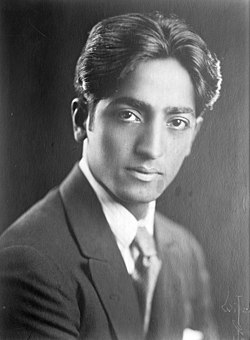
It all started with a search. I now only have minor recollections of what that search was about. I had been kicked out of religious education twice in the same amount of years, for questioning nearly 2000 years of "historical" belief. As with all aspects of my life then, I was used to asking questions. From "why did Germany attack Russia in spring?", "How can you work around a improvised right hip?", "Who says that I am lesser than you because I am different?". These are questions that I had. The one question that was always present, the one word that counted in all things a person who never felt that he was a part of established norms, was why.
I never did fit in, and was glad. Sure, it made life in a country where there were mythical ideals, facts long warped into vague and un-substantiated hero worship, and an upsurge in American-style patriotism that made me ill to think about, even to this day. I never understood why Australia was "God's" own country, or why we should glorify the ineptitude of British High Command sending eager and willing young men to their deaths in the thousands. Sure, I wanted to be in the military, but it wasn't for the ANZAC ideal, it was more because I knew that it was something made me feel alive. War is a place where legends are made, Rommel, Africanus, Ptolemy III, Hammurabi, Julius Caesar, but it is also a thing where our mortality is revealed to us in destructive beauty. Where the civility of man is ripped away, and we are exposed for what we are, highly competent and effective dealers of death. This lead me on a search, that would start to shape who I have become.
Somewhere along the line, I developed a crush. She was a gorgeous girl, Laotian. I won't write her name, because a few of you that read this might know her. She was strangely enough, JW, but we had touched on the ideas of eastern religion. I then started reading more into Buddhism. It never really clicked thoroughly. A lot of it I agreed with, but some side of me was starving. There was this, void forming, and I could only placate it with discipline. Thankfully in primary school, I had already developed a huge love of history, and by highschool, this was becoming more evident as I was enjoying this side of life more. I stumbled across a book about Samurai. This was like a gateway drug. Discipline, beauty, animism and structure. I was starting to feel that I was progressing.
I then started researching the systems behind Shinto, and came across Zen, Toasim, Confucius, Kaballah, Zoroastrianism. Everything was pointing to India. What was it with Indian thought that had struck a chord so deep inside. Sure, I heard stories from my dad's father about his time in India, and got an addiction to curry to boot. But what was it? It was when I read the Mahabharata and the Vedas that things took an intriguing turn. Knowing that somewhere inside, I never had a belief in gods or the like, I started reading these books from a psychological standpoint. Reading each of the deities and then translating them into psychological constructs, things leaped in my mind. New doors started opening, and for the first time it hit me. Existence and experience. These two words should be remembered I thought.
I read about 10 religious texts in highschool. The King James Bible, The Mahabharata, The Vedas, The Baghavad Vita's, The Koran, The Torah, The Tibetan Book of the Dead, The Egyptian Book Of The Dead, The Dead Sea Scrolls and a few smaller books on Japanese religions and Indian belief systems. It wasn't because I was trying to find god or some higher purpose. It was because I wanted to understand at a deeper level, something that was becoming more apparent. The more I read, the more I realized that somewhere, we lost touch. The Druids didn't have the answers, the Christians didn't either, nor did the Muslims. If these older religions didn't have the answers, I had to switch to philosophy. Socrates, Plato, Engels, Marx, Aristotle, Kant, Turing. The last one struck a chord. How could, out of all of these famous philosophers, people who had shaped our entire modern era, could a code-breaker strike a chord in me? And it was a rather disturbing paradox that unfolded. If a machine were to gain sentience, what would happen? Would that machine invent a religion establish control, or more importantly, would it need to?
This left me with a question. What is it in humanity, what was this innate desire we had, to deny our ability to become the most dominant and destructive being on the planet, and give it all up to something that may not exist. What comfort did we need to have fulfilled that made us do this? It would be a lot of years before I was able to even comprehend an answer. But, in the meantime, I had other things to contend with. My back was not getting better, and it was obvious that surgery was going to be required. Through all my times in hospital, I nearly died three times. I had experiences, or at least medically induced experiences that I thought brought me to believe there was an afterlife. But it was the third one that left me shaken, and ready to accept a truth that many would disagree on. I had developed a gangrene infection in my spine. I was becoming delusional, and wished nothing more than a swift death. My feeble attempts at suicide were pitiful and weak. I went for surgery, and they almost lost me on the table. It was the first time I recall, that I felt peace. I could see nothing but blackness. There was nothing, no imagined ghosts of family members, no discourses with military generals, just an overwhelming peace in the knowledge, that there was nothing. Even now, typing this thought, brings about feelings of such peace in me. I had found that being clear of societal programming in an afterlife, had brought me such a powerful emotion.
Back about 4 years before this, I had stumbled across a book by Jiddu Krishnamurti. You would think with a name invoking Krishna, that he would be evoking the Indian pantheon of gods. This was not to be. I wish I had paid more attention to his works, but it would be another 19 years, 2 continents and a random encounter on a tube ride in central London that would bring this full circle. I had just got on a train, and was looking at a relatively stunning Indian girl, when I noticed she was reading a collected works of Jiddu. The next day, I went and picked up a book. Those of you who know me well, know that I suffer from mental health issues, low self esteem, lack of self confidence on top of my physical issues. Well, I have been reading his works, and they are making a change, a drastic change, on my life. The first thing, was to go back to that last time I nearly died, and remember it. That peaceful feeling of acceptance. It was then clear, that if I am not feeling influenced to do good because of rewards in the afterlife, why am I doing all the things that make us do good. I love my volunteering, especially at the Aspire Gym, where I meet many awesome people with disabilities, I love volunteering at the YMCA because I get to interact with people I wouldn't meet generally. But what is the real reason I do all this? Well, the answer was sickeningly simple. Satisfaction. With a new focus of leaving the past in the past, with the thought that the future is not written, and may never come, it put the focus on to the present. Why do I say hi to everyone I meet? Because when I do, I feel good about it. Sure, the person may not respond, but, hearing someone say hi back makes me feel that I have touched on someone else's day. They may not have expected someone to acknowledge their existence, which is becoming too increasingly common these days. Why do I thank everyone for something they do? Well, I feel good about what they have done, and it makes me feel satisfied that I have acknowledged that they took time out of their day, be it their job to or not, to have made my life that bit easier.
Then I asked myself, is this feeling of self satisfaction selfish or is it beneficial? How does it affect my next action, or how could it affect someone else's next action? And it then hit me, if we all felt a sense of satisfaction when we did something, we would be encouraged to do more of them. What if, for a period of 5 minutes, everyone did something to help someone, not because their god/pastor/tree told them to, but because it made them feel good to do it? Would this cause us to become selfish, or as Krishnamurti believed, could it actually make us realize we are human, and that the prospect of doing something positive for our own satisfaction, and not the promise of eternal life that most probably doesn't exist, drive us to care more on how we treat each other?
Just for an experiment, go out, and do something for someone else, not because you think it is the right thing to do, but knowing that you will feel satisfied that you have done something positive. Then try and not do it again. Believe me, having started this thought experiment, I find that if don't think positively and do something that reflects on that notion, that I feel dissatisfied and start slipping back, momentarily, into old thoughts.
Subscribe to:
Comments (Atom)