It all started with a search. I now only have minor recollections of what that search was about. I had been kicked out of religious education twice in the same amount of years, for questioning nearly 2000 years of "historical" belief. As with all aspects of my life then, I was used to asking questions. From "why did Germany attack Russia in spring?", "How can you work around a improvised right hip?", "Who says that I am lesser than you because I am different?". These are questions that I had. The one question that was always present, the one word that counted in all things a person who never felt that he was a part of established norms, was why.
I never did fit in, and was glad. Sure, it made life in a country where there were mythical ideals, facts long warped into vague and un-substantiated hero worship, and an upsurge in American-style patriotism that made me ill to think about, even to this day. I never understood why Australia was "God's" own country, or why we should glorify the ineptitude of British High Command sending eager and willing young men to their deaths in the thousands. Sure, I wanted to be in the military, but it wasn't for the ANZAC ideal, it was more because I knew that it was something made me feel alive. War is a place where legends are made, Rommel, Africanus, Ptolemy III, Hammurabi, Julius Caesar, but it is also a thing where our mortality is revealed to us in destructive beauty. Where the civility of man is ripped away, and we are exposed for what we are, highly competent and effective dealers of death. This lead me on a search, that would start to shape who I have become.
Somewhere along the line, I developed a crush. She was a gorgeous girl, Laotian. I won't write her name, because a few of you that read this might know her. She was strangely enough, JW, but we had touched on the ideas of eastern religion. I then started reading more into Buddhism. It never really clicked thoroughly. A lot of it I agreed with, but some side of me was starving. There was this, void forming, and I could only placate it with discipline. Thankfully in primary school, I had already developed a huge love of history, and by highschool, this was becoming more evident as I was enjoying this side of life more. I stumbled across a book about Samurai. This was like a gateway drug. Discipline, beauty, animism and structure. I was starting to feel that I was progressing.
I then started researching the systems behind Shinto, and came across Zen, Toasim, Confucius, Kaballah, Zoroastrianism. Everything was pointing to India. What was it with Indian thought that had struck a chord so deep inside. Sure, I heard stories from my dad's father about his time in India, and got an addiction to curry to boot. But what was it? It was when I read the Mahabharata and the Vedas that things took an intriguing turn. Knowing that somewhere inside, I never had a belief in gods or the like, I started reading these books from a psychological standpoint. Reading each of the deities and then translating them into psychological constructs, things leaped in my mind. New doors started opening, and for the first time it hit me. Existence and experience. These two words should be remembered I thought.
I read about 10 religious texts in highschool. The King James Bible, The Mahabharata, The Vedas, The Baghavad Vita's, The Koran, The Torah, The Tibetan Book of the Dead, The Egyptian Book Of The Dead, The Dead Sea Scrolls and a few smaller books on Japanese religions and Indian belief systems. It wasn't because I was trying to find god or some higher purpose. It was because I wanted to understand at a deeper level, something that was becoming more apparent. The more I read, the more I realized that somewhere, we lost touch. The Druids didn't have the answers, the Christians didn't either, nor did the Muslims. If these older religions didn't have the answers, I had to switch to philosophy. Socrates, Plato, Engels, Marx, Aristotle, Kant, Turing. The last one struck a chord. How could, out of all of these famous philosophers, people who had shaped our entire modern era, could a code-breaker strike a chord in me? And it was a rather disturbing paradox that unfolded. If a machine were to gain sentience, what would happen? Would that machine invent a religion establish control, or more importantly, would it need to?
This left me with a question. What is it in humanity, what was this innate desire we had, to deny our ability to become the most dominant and destructive being on the planet, and give it all up to something that may not exist. What comfort did we need to have fulfilled that made us do this? It would be a lot of years before I was able to even comprehend an answer. But, in the meantime, I had other things to contend with. My back was not getting better, and it was obvious that surgery was going to be required. Through all my times in hospital, I nearly died three times. I had experiences, or at least medically induced experiences that I thought brought me to believe there was an afterlife. But it was the third one that left me shaken, and ready to accept a truth that many would disagree on. I had developed a gangrene infection in my spine. I was becoming delusional, and wished nothing more than a swift death. My feeble attempts at suicide were pitiful and weak. I went for surgery, and they almost lost me on the table. It was the first time I recall, that I felt peace. I could see nothing but blackness. There was nothing, no imagined ghosts of family members, no discourses with military generals, just an overwhelming peace in the knowledge, that there was nothing. Even now, typing this thought, brings about feelings of such peace in me. I had found that being clear of societal programming in an afterlife, had brought me such a powerful emotion.
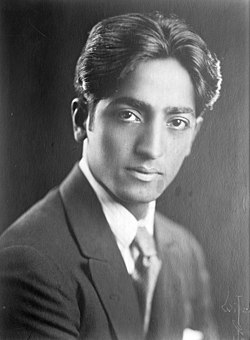
Back about 4 years before this, I had stumbled across a book by Jiddu Krishnamurti. You would think with a name invoking Krishna, that he would be evoking the Indian pantheon of gods. This was not to be. I wish I had paid more attention to his works, but it would be another 19 years, 2 continents and a random encounter on a tube ride in central London that would bring this full circle. I had just got on a train, and was looking at a relatively stunning Indian girl, when I noticed she was reading a collected works of Jiddu. The next day, I went and picked up a book. Those of you who know me well, know that I suffer from mental health issues, low self esteem, lack of self confidence on top of my physical issues. Well, I have been reading his works, and they are making a change, a drastic change, on my life. The first thing, was to go back to that last time I nearly died, and remember it. That peaceful feeling of acceptance. It was then clear, that if I am not feeling influenced to do good because of rewards in the afterlife, why am I doing all the things that make us do good. I love my volunteering, especially at the Aspire Gym, where I meet many awesome people with disabilities, I love volunteering at the YMCA because I get to interact with people I wouldn't meet generally. But what is the real reason I do all this? Well, the answer was sickeningly simple. Satisfaction. With a new focus of leaving the past in the past, with the thought that the future is not written, and may never come, it put the focus on to the present. Why do I say hi to everyone I meet? Because when I do, I feel good about it. Sure, the person may not respond, but, hearing someone say hi back makes me feel that I have touched on someone else's day. They may not have expected someone to acknowledge their existence, which is becoming too increasingly common these days. Why do I thank everyone for something they do? Well, I feel good about what they have done, and it makes me feel satisfied that I have acknowledged that they took time out of their day, be it their job to or not, to have made my life that bit easier.
Then I asked myself, is this feeling of self satisfaction selfish or is it beneficial? How does it affect my next action, or how could it affect someone else's next action? And it then hit me, if we all felt a sense of satisfaction when we did something, we would be encouraged to do more of them. What if, for a period of 5 minutes, everyone did something to help someone, not because their god/pastor/tree told them to, but because it made them feel good to do it? Would this cause us to become selfish, or as Krishnamurti believed, could it actually make us realize we are human, and that the prospect of doing something positive for our own satisfaction, and not the promise of eternal life that most probably doesn't exist, drive us to care more on how we treat each other?
Just for an experiment, go out, and do something for someone else, not because you think it is the right thing to do, but knowing that you will feel satisfied that you have done something positive. Then try and not do it again. Believe me, having started this thought experiment, I find that if don't think positively and do something that reflects on that notion, that I feel dissatisfied and start slipping back, momentarily, into old thoughts.

Excellent post Jim! This is going on my blog, very very soon! :D
ReplyDeleteThanks Humaira! Glad you enjoyed! Feel free to share.
Delete